Write an About Page That Builds Trust and Converts
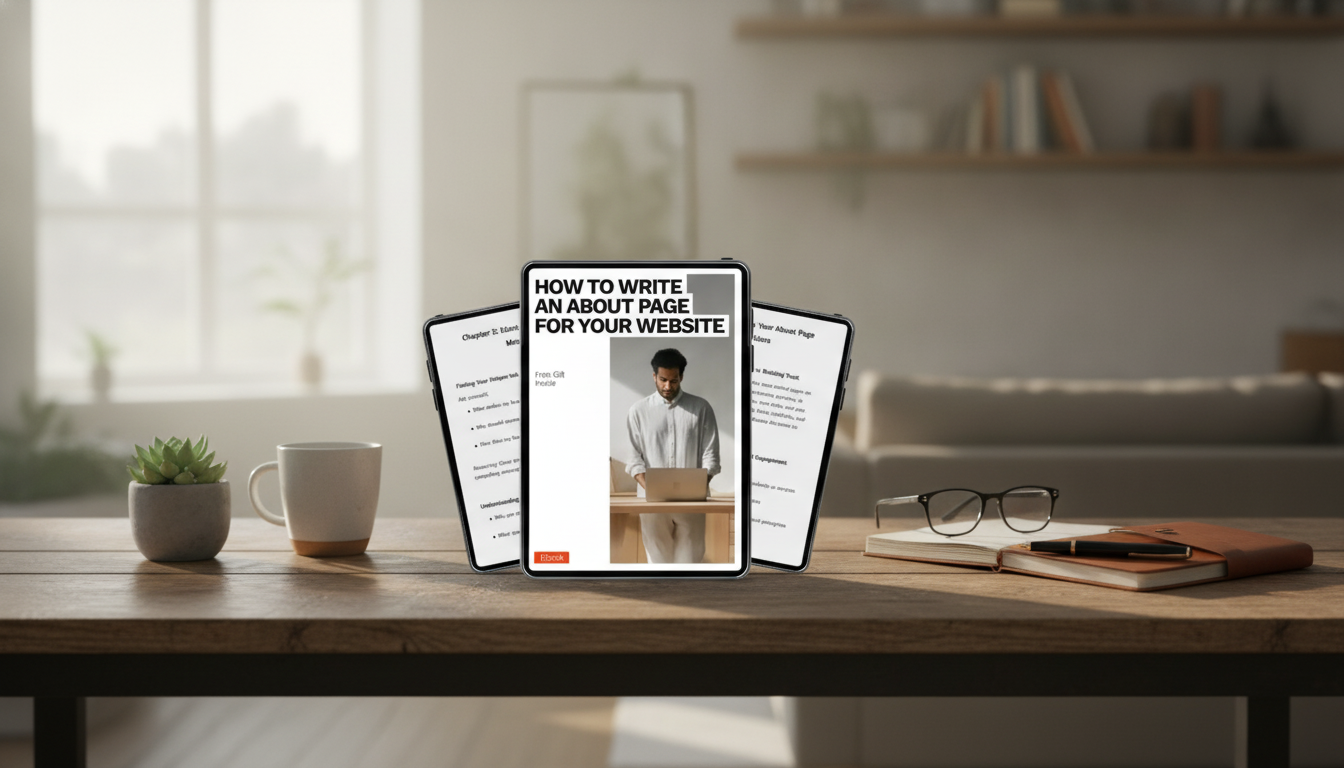
How to Write an About Page That Builds Trust and Wins Customers
An About page is often the first place people go when deciding whether a business is credible, aligned with their values, and worth buying from. A strong About page blends clarity, personality, and proof—so visitors quickly understand who the business serves, what it stands for, and what to do next. For more guidance, see the value and importance of design when branding in social media.
Start with the one question visitors are asking
Before anyone cares about your origin story, they’re quietly asking: “Is this for me?” Answer that immediately with a clear one-line value statement that connects your offer to a real outcome. For further reading, see Life Science Recruitment Marketing: Attracting Quality Candidates.
- Lead with relevance: “We help [audience] achieve [outcome] without [common pain].”
- Name the audience and the change: be specific about who you serve and what improves after they buy.
- Skip the long backstory above the fold: earn attention with usefulness first.
- Add a credibility cue early: years in business, notable results, press, certifications, or recognizable clients (only if true).
If you want a fast way to draft this opening without overthinking, use a fill-in format like the How to Write an About Page for Your Website – Website Copywriting Guide, About Us Page Template, Small Business Branding eBook.
Choose an About page structure that fits the brand
Great About pages feel “obvious” in hindsight because they follow a structure that matches the brand’s strengths. Pick a format first, then write to that container.
- Choose a framework: founder-led story, customer-led mission, process-led expertise, or values-led community.
- Make it skimmable: use short sections and clear subheads so visitors can jump to what matters.
- Keep voice consistent: warm and conversational, expert and direct, or minimalist and premium—whatever matches your site.
- Build one narrative thread: problem → approach → proof → invitation.
Common About Page Frameworks
| Framework | Best for | Key sections to include |
|---|---|---|
| Founder-led story | Personal brands, studios, small service businesses | Origin, values, what you do, proof, call to action |
| Customer-led mission | Community, lifestyle, consumer brands | Who it’s for, why it exists, what you offer, social proof |
| Process-led expertise | Consultants, agencies, specialized services | Method, differentiators, results, FAQs, next step |
| Values-led brand | Purpose-driven brands, nonprofits, ethical products | Principles, sourcing/impact, transparency, how to join/buy |
Write a compelling opening section (above the fold)
The top of the page should do what a great storefront sign does: orient people quickly and reduce uncertainty.
- Headline: state the promise or positioning in plain language.
- Subhead: add specificity (industry, niche, geography, or signature approach).
- One short paragraph: connect the visitor’s goal to your role in achieving it.
- Primary call to action: view services, shop bestsellers, download a resource, or contact you.
Keep the CTA aligned with intent. If a visitor is still evaluating, “Browse the collection” or “See how it works” often converts better than a high-commitment “Book a call.”
Tell a story that earns trust (without oversharing)
A story builds trust when it helps someone make a decision. Focus less on a complete biography and more on the “why” that explains your standards, your choices, and your point of view.
- Anchor to the customer’s problem: connect your “why” to what your customer struggles with.
- Keep it tight: what was broken, what you learned, what changed, and what exists now.
- Use real specifics: a turning point, a principle, a lesson that shaped how you work.
- Edit ruthlessly: remove anything that doesn’t help the visitor decide.
For practical guidance on what users look for on About pages, Nielsen Norman Group’s research is a helpful reference: About Us Information on Websites.
Make the value clear: what you do and how it works
Simple “How It Works” Blocks to Borrow
| Business type | Step 1 | Step 2 | Step 3 |
|---|---|---|---|
| Service business | Share goals | Get a tailored plan | See results with support |
| Digital product | Choose the right resource | Follow the template/guide | Implement and refine |
| Ecommerce brand | Find your fit | Order with confidence | Get ongoing help and updates |
Back up claims with proof
If you sell guidance or education products, consider featuring one “quick win” example of what a customer can do with your materials. For instance, a product like Rental Car Insurance Survival Checklist | Insurance for Rental Cars What You Need | Printable Travel Planning Checklist is easy to position with proof because the outcome is immediate: fewer surprises at the counter and clearer coverage decisions.
Bring the brand to life with voice and visuals
If you want additional examples of About page elements that build connection quickly, Mailchimp’s guidance is a useful checklist: About Us Page Tips.
End with a clear next step
For ecommerce brands, linking directly to a flagship product can work well because it turns curiosity into action. If your audience wants a guided, structured approach, you can point them to How to Write an About Page for Your Website – Website Copywriting Guide, About Us Page Template, Small Business Branding eBook or another clear “starter” offer like Calling Your Pet: Cute vs. Classic – A Smart Guide to Choosing Cute vs Serious Pet Names with Confidence.
Template you can fill in quickly
FAQ
What should an About page include?
Include who you help, what you offer, why you exist, how it works, proof (testimonials/results), and a clear next step so visitors know exactly where to go after they trust you.
How long should an About page be?
It should be long enough to answer key questions quickly: a strong above-the-fold summary plus scannable sections. Add extra detail only when it reduces purchase risk or answers common objections.
Should an About page be written in first person?
Either works. First person often fits founder-led brands, while third person can feel more corporate; the best choice is the one that matches your site’s voice and keeps the message clear.













Leave a comment