Lease vs Buy a Car: Pick the Right Option for You
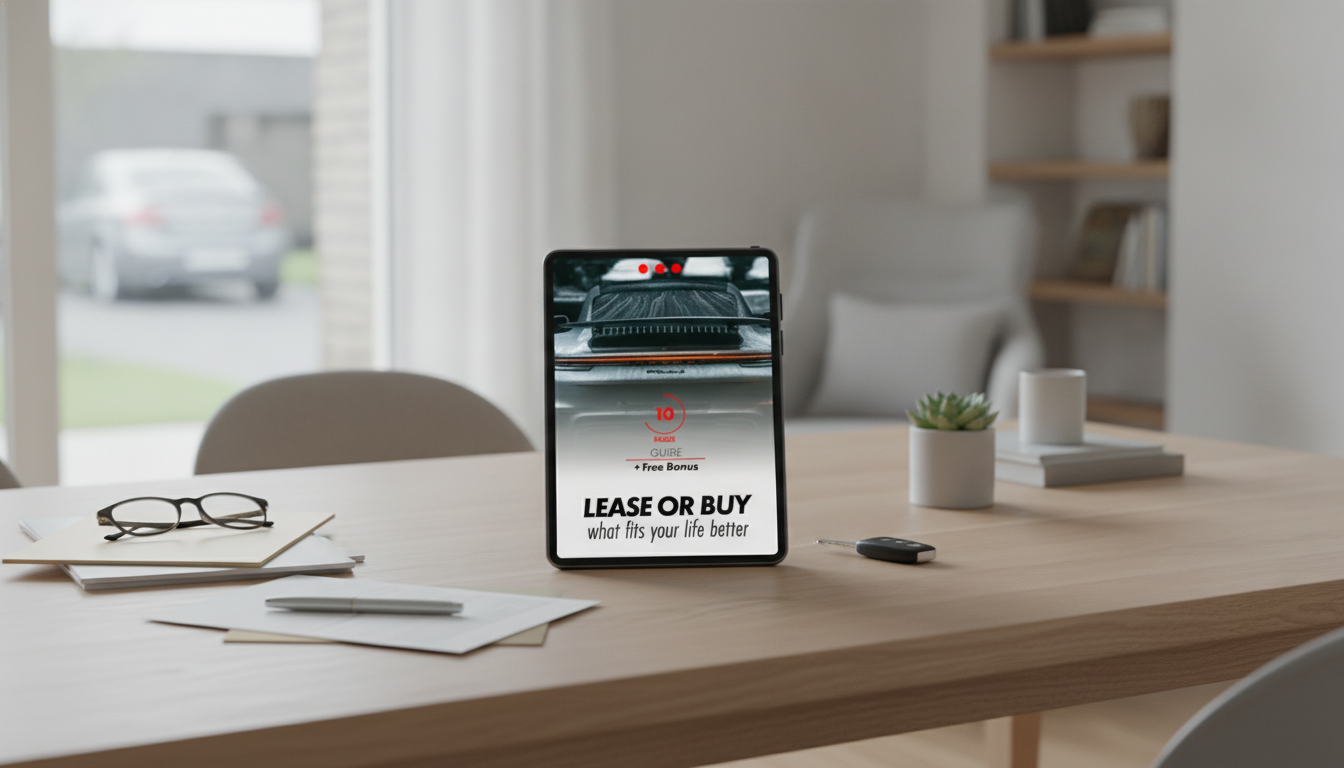
Lease or Buy: A Smart Guide to Choosing the Right Car Ownership Path
Leasing and buying can both be “right,” depending on how long a car will be kept, how many miles are driven, how predictable the budget needs to be, and how much flexibility matters. The clearest way to decide is to separate payment-size from total cost, then check how the contract rules will feel in real life. Use the sections below to compare the money factors and the day-to-day fit, then finish with a quick checklist to pick your path confidently.
Start with the 4 questions that decide most outcomes
- How long will the car realistically be kept: 2–3 years, 4–6 years, or 7+ years?
- How many miles are driven each year, and how predictable is that number?
- Is the priority lowest monthly payment, or lowest total cost over time?
- Is vehicle flexibility important (mods, wear-and-tear tolerance, ability to sell at any time)?
If you answer “2–3 years,” “miles are predictable,” and “payment stability matters,” leasing tends to rise to the top. If you answer “5+ years,” “mileage varies,” or “I want full control,” buying usually becomes the easier long-run choice.
Lease vs buy at a glance
Leasing typically means lower monthly payments and newer cars more often, but it also comes with mileage limits and end-of-lease rules. Buying usually costs more monthly at first, but it builds equity and can be cheaper over a longer ownership window. The best choice depends on total cost, not just the payment.
Quick comparison: leasing vs buying
| Factor | Leasing tends to fit when… | Buying tends to fit when… |
|---|---|---|
| Time horizon | Switching cars every 2–3 years | Keeping a car 5+ years |
| Mileage | Driving is moderate and predictable | Driving is high or varies a lot |
| Monthly payment | Lower payment is a priority | Payment can be higher to reduce long-term cost |
| Upfront cash | Preferring minimal cash due at signing | Able to put money down (or comfortable financing) |
| Maintenance | Wanting more years under warranty | Comfortable with maintenance as the car ages |
| Flexibility | Okay with rules and scheduled turn-in | Wanting to sell/trade anytime, modify, or keep indefinitely |
| End of term | Returning the car or buying it for a set price | Owning outright after payoff |
Money math that matters (beyond the monthly payment)
- Total out-of-pocket: compare all payments, fees, taxes, and expected maintenance across the time you’ll keep the car. A low lease payment can lose its advantage after mileage overages, turn-in repairs, or repeated “drive-off” costs every few years.
- Opportunity cost: a lower lease payment can free cash for savings, debt payoff, or a stronger emergency fund. The best “deal” sometimes is the one that makes your finances more resilient.
- Depreciation risk: leasing shifts much of the resale-value uncertainty away from the driver; buying keeps it with the owner. If the market drops or the model ages poorly, owners feel it at resale time.
- Interest and money factor: loans use APR; leases use a money factor. Converting the money factor to an approximate APR can make it easier to compare financing cost apples-to-apples.
- Taxes and fees: sales tax can be handled differently on leases vs purchases depending on location. Always verify local rules and itemized dealer fees before signing.
For deeper consumer guidance on leasing disclosures and costs, review the Federal Trade Commission’s leasing overview. For loan-focused shopping tips, the Consumer Financial Protection Bureau’s auto loan resources are a practical reference. For common lease components (money factor, residual value, fees), see Edmunds’ lease basics.
Lifestyle fit: the hidden costs are often behavioral
- Commute and travel: long commutes, frequent road trips, or unpredictable mileage often make buying less stressful than tracking a lease cap.
- Family changes: growing households, new drivers, or changing cargo needs can favor buying for flexibility—or leasing for quick upgrades if needs shift often.
- Parking and wear: street parking, pets, kids, and harsh climates increase wear-and-tear risk at lease turn-in, which can turn “low payment” into “surprise bill.”
- Tech appetite: if having the newest safety and infotainment every few years is a genuine priority, leasing can match that cadence with less resale hassle.
- DIY and customization: modifications, wraps, off-road use, and heavy accessories typically align better with buying, where you control the vehicle’s condition and timeline.
Decision guide by timeline: 2–3 years vs 4–6 years vs 7+ years
Typical fit by ownership timeline
| Time kept | What to prioritize | Usually feels easier |
|---|---|---|
| 2–3 years | Warranty coverage, predictable payments, low hassle upgrades | Leasing (if mileage is stable) |
| 4–6 years | Balanced total cost, manageable maintenance, flexibility to sell/trade | Buying |
| 7+ years | Lowest long-run cost, ownership control, no mileage limits | Buying |
Lease contract checkpoints that prevent surprises
Buying checkpoints: financing, ownership costs, and exit strategy
A simple pick-your-path checklist
Helpful digital guides to make the decision faster
- Lease or Buy, What Fits Your Life Better – A Smart Guide to Car Ownership Decisions
- Rental Car Insurance Survival Checklist
FAQ
Is leasing always cheaper than buying?
No. Leasing often has lower monthly payments, but total cost depends on time horizon, fees, mileage, and whether a buyer keeps the car long enough to benefit from ownership after payoff.
How many miles per year make leasing a bad idea?
It depends on the lease terms, but high or unpredictable mileage increases the risk of overage charges. If your annual miles regularly exceed common lease caps or swing a lot year to year, buying is often simpler.
What happens at the end of a car lease?
There’s typically a return inspection, potential wear-and-tear or mileage charges, and often a disposition fee. You can usually return the vehicle, buy it for the residual price, or move into another lease.















Leave a comment