How to Choose a Smart Scale for Fitness Tracking
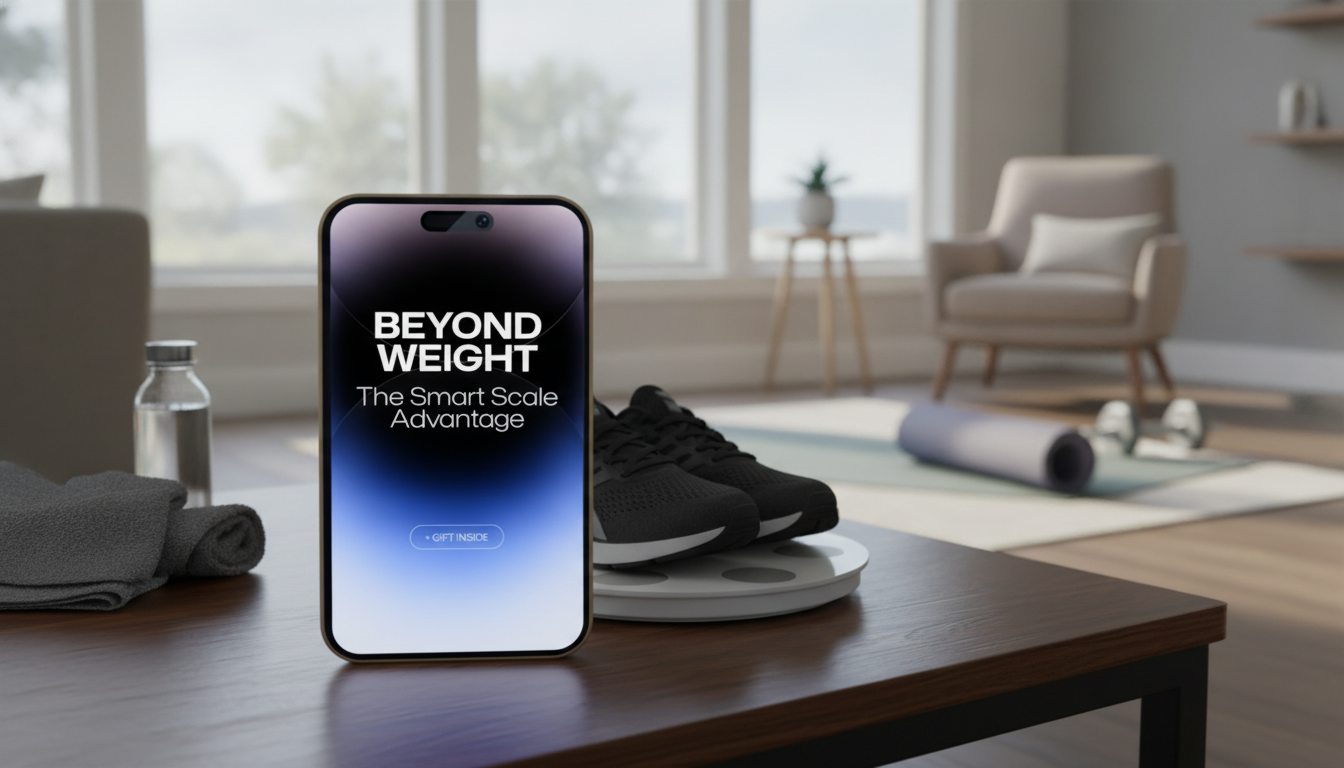
A smart scale turns a quick step-on moment into a repeatable snapshot of how your body is responding to training, nutrition, travel, and everyday stress. While the number on the display is still “just weight,” modern scales pair that measurement with app-based trend views and bioelectrical impedance analysis (BIA) estimates—useful for spotting direction over time. The best smart scale for real-life tracking is the one that stays consistent under the same conditions, syncs reliably, and presents data in a way that supports your goals instead of distracting you.
What a Smart Scale Measures (and What It Estimates)
Smart scales directly measure weight. Most other numbers in the app are estimates derived from BIA, a method that sends a very low electrical signal through the body and uses resistance to estimate composition. BIA can be informative, but it’s sensitive to day-to-day changes that have nothing to do with fat gain or loss.
Common estimated metrics include body fat percentage, lean mass (or “fat-free mass”), muscle mass, total body water, bone mass, visceral fat rating, BMI, and basal metabolic rate. The most practical way to use these metrics is to watch trends rather than fixating on a single reading.
Because BIA readings can shift with hydration, recent exercise, food intake, skin temperature, and menstrual cycle, a “weird” data point often means “different conditions,” not “sudden body change.” For a helpful overview of what BIA does (and doesn’t) tell you, see the Cleveland Clinic’s explanation of Bioelectrical Impedance Analysis (BIA). It also helps to choose a scale/app that clearly defines each metric and notes how it’s calculated and updated.
Who Benefits Most from a Smart Scale
Smart scales are especially useful when the scale weight alone feels noisy or discouraging. They can also simplify routines by automatically logging weigh-ins and separating data for multiple people.
- Fat-loss goals: When weight stalls, seeing an estimated body fat trend drift downward can support consistency and reduce frustration.
- Strength or recomposition goals: Tracking weight alongside estimated lean mass can help contextualize changes across training blocks.
- Lifestyle and health monitoring: Consistent morning weigh-ins often reveal patterns linked to sleep, sodium intake, travel, or stress.
- Households: Multi-user recognition and separate profiles prevent data mix-ups and make the scale practical for families or roommates.
For broader context on how weight relates to health risk (and why a single number rarely tells the whole story), the NHLBI’s resource on assessing weight and health risk is a helpful reference point.
Accuracy and Consistency: What to Look For
With smart scales, consistency is the superpower. A scale that reads similarly under the same conditions makes trends meaningful—even if the body fat percentage estimate isn’t “lab perfect.” Look for a stable platform, solid construction, and clear guidance around calibration and routine.
Also check resolution and capacity. Many consumer scales read in 0.1 lb (or 0.05 kg) increments, and maximum capacity should comfortably cover all intended users. If the platform feels narrow or wobbly, repeatability suffers.
| Feature | Why it matters | What to choose |
|---|---|---|
| Consistent protocol support | BIA is sensitive to hydration and timing | A scale/app that encourages the same routine and shows trend views |
| Stable platform | Reduces movement-related fluctuations | Wide base, non-slip feet, rigid construction |
| Clear unit options | Avoids confusion between lb/kg and decimal formats | Easy unit switching and precise display |
| Multi-user profiles | Separates household data | Auto user recognition or simple profile switching |
| Offline/guest mode | Not every weigh-in needs syncing | Stores readings and syncs later (or can be used without an account) |
App and Ecosystem Fit
A smart scale is only as good as its app experience. Before buying, confirm iOS/Android compatibility and whether the scale connects by Bluetooth or Wi‑Fi. Wi‑Fi models can be more convenient because they often sync without your phone nearby, while Bluetooth models are typically simpler and lower cost.
Next, look at data ownership. CSV export or integrations with Apple Health, Google Fit, Fitbit, or training apps can make the data more useful long-term. Trend visualization matters even more: weekly/monthly trend lines and rolling averages help you ignore normal daily noise.
How to Choose Based on Your Goal
A Simple Weigh-In Routine That Improves Data Quality
When the Numbers Don’t Match How You Feel
Short-term weight increases can come from glycogen storage, sodium intake, inflammation after hard workouts, or hormonal shifts. Pair scale trends with other signals—waist measurement, progress photos, performance markers, resting heart rate, and sleep quality. For more context on body fat measurement approaches and what they mean, Mayo Clinic’s overview of body fat percentage is a useful guide.
Shop Helpful Digital Guides
- Beyond Weight: The Smart Scale Advantage – How to Choose a Smart Scale for Health and Fitness Tracking
- Rental Car Insurance Survival Checklist | Insurance for Rental Cars What You Need | Printable Travel Planning Checklist
- Summer Color Harmony Bundle | summer season colors 3-in-1 Digital Guides
FAQ
Are smart scales accurate for body fat percentage?
They’re usually accurate for weight, but body fat percentage is an estimate based on BIA and can vary with hydration, timing, and recent exercise. For most people, the trend over weeks is more useful than the exact number on a single day.
Is Wi‑Fi better than Bluetooth for a smart scale?
Wi‑Fi can be more convenient because it often syncs automatically without your phone nearby, while Bluetooth is typically simpler and more affordable. Either can work well as long as syncing is reliable and the app shows clear trends.
How often should someone weigh in for health and fitness tracking?
Daily weigh-ins can create the cleanest trend line and help smooth out normal fluctuations, but 2–3 times per week works well if daily tracking feels stressful. In both cases, focus on weekly averages and consistency.














Leave a comment