Baby Overstimulation Signs: Calm Routines That Work
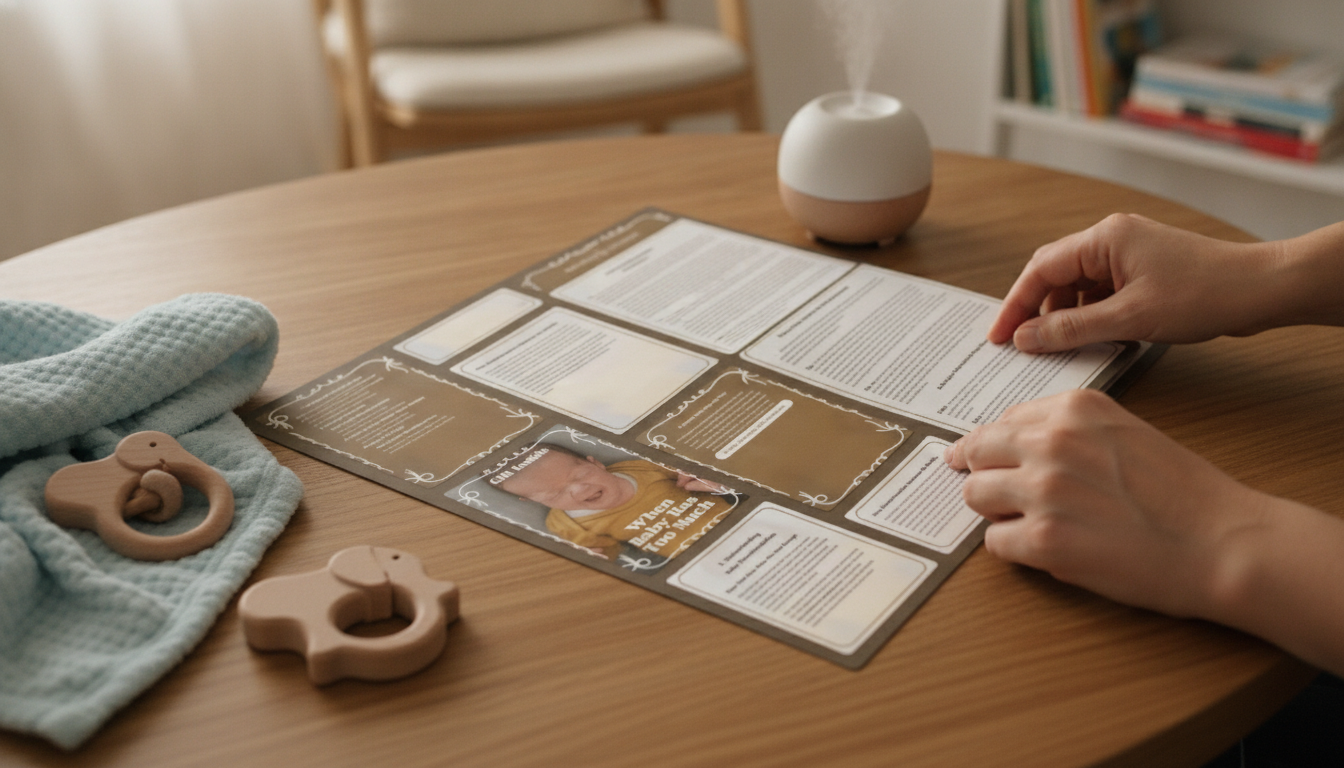
When Baby Has Too Much: Spotting Overstimulation and Building Calm Routines
Babies take in a huge amount of sound, light, movement, touch, and social interaction every day. When that input exceeds what their nervous system can handle, the result can look like fussiness, sudden crying, or “nothing works.” Understanding overstimulation helps new parents respond earlier, reduce stress, and create predictable routines that support sleep, feeding, and bonding. For more guidance, see Babies and Over-Stimulation: What are the Cues? – Great Kids, Inc..
What “too much” means for a baby’s nervous system
Overstimulation happens when a baby’s ability to process sensations is exceeded by the environment or activity level. It’s less about a single “bad” moment and more about a nervous system that’s still learning to filter, organize, and recover from everyday input. For further reading, see 11 Signs of an Overstimulated Baby and How to Soothe Them.
A baby who is tired, hungry, gassy, or uncomfortable usually reaches that “too much” point faster—small stressors stack up. Temperament also matters: some babies are naturally more sensitive to noise, light, transitions, or handling, and certain developmental stages can make them temporarily more reactive. Overstimulation can show up during happy events, too (visitors, outings, playful sibling attention). It isn’t a sign of poor parenting—it’s a signal that your baby needs fewer inputs and more help regulating.
Common signs of overstimulation (and how they differ from hunger or tiredness)
Overstimulation often has a “ramping up” pattern: subtle disengagement first, then quick escalation if the environment stays busy. Catching early cues can prevent a full meltdown.
Early cues
Looking away, a glazed stare, reduced eye contact, yawning, hiccups, sneezing, finger splaying, stiffening, or arching can all be early signs that your baby needs a break.
Escalating cues
Fussing that rises quickly, frantic rooting without settling, pushing away, swatting, or turning the head side-to-side can mean baby is seeking relief—sometimes from hunger, but often from overload.
Late cues
Intense crying, inability to latch or take a bottle calmly, thrashing, and “wired” behavior that makes sleep harder usually mean baby’s nervous system is past the point of easy recovery and needs a quiet reset.
Clues it may be hunger: rhythmic rooting, hands to mouth with focused seeking, and calming somewhat once feeding begins.
Clues it may be tiredness: slow blinking, reduced movement, a consistent pattern based on typical sleep timing, and calming with a short wind-down routine.
| Cue | What it may mean | Helpful response |
|---|---|---|
| Turns head away / avoids eye contact | Needs a break from interaction | Pause talking, reduce stimulation, hold baby facing in toward chest |
| Finger splaying / startled movements | Sensory overload building | Dim lights, lower noise, slow rocking or still hold |
| Hiccups / sneezing bursts | Stress response after too much input | Quiet room, swaddle (if age-appropriate), offer pacifier if used |
| Arching back / stiffening | Overwhelmed or uncomfortable | Check diaper/temperature, switch position, reduce handling |
| Sudden inconsolable crying after busy moment | Overstimulation tipped into meltdown | Short reset: dark + quiet + steady motion + minimal talking |
Everyday triggers that can push a baby over the edge
Many overstimulation triggers are “normal life” factors that become too intense or too frequent—especially when stacked together.
- Noise and voices: multiple people talking at once, TV/music, barking dogs, crowded spaces.
- Visual load: bright overhead lighting, screens, busy patterns, constant face-to-face engagement without breaks.
- Too much movement: being passed around, rapid bouncing, long errands with frequent transitions in and out of a car seat/stroller.
- Body discomfort: gas, reflux, temperature changes, tight clothing, scratchy tags, wet diaper, hunger-tired overlap.
- Timing: missing a sleep window, “witching hour” periods, growth spurts and developmental leaps.
A fast calming reset: 5–10 minutes to reduce overload
When the crying feels sudden or confusing, use a short, repeatable reset. The goal isn’t to “fix” baby—it’s to lower input so their nervous system can catch up.
For additional evidence-based soothing tips, see the American Academy of Pediatrics guidance on soothing a crying baby.
Calm routines that prevent overstimulation from building up
As your baby grows, developmental changes can shift what “too much” looks like. If you’re curious about age-based behavior changes, the CDC’s milestone resources can be a helpful reference point (for example, milestones by two months).
Reading infant behavior: patterns that help you respond earlier
When to get medical guidance
A practical guide to keep on hand during tough moments
- When Baby Has Too Much – Practical Guide to Baby Overstimulation Signs, Calm Routines, and Understanding Infant Behavior for New Parents
- Rental Car Insurance Survival Checklist | Insurance for Rental Cars What You Need | Printable Travel Planning Checklist (useful for simplifying logistics when traveling so baby’s routine stays calmer)
FAQ
How long does overstimulation last in babies?
Many babies improve within minutes once stimulation is reduced, especially if you catch early cues. If your baby is overtired, recovery can take 20–60 minutes, and preventing missed sleep windows often shortens future meltdowns.
Is it okay to take an overstimulated baby outside or for a walk?
Yes, if “outside” is actually lower stimulation—quiet air, steady motion, and fewer voices can help. Choose a calm route, avoid bright sun or busy streets, and keep talking minimal until baby settles.
Can babies be overstimulated by too much playtime?
Yes—rapid toy switching, loud toys, constant face-to-face engagement, and long play without breaks can push some babies into overload. Try short play bursts with quiet pauses, and let disengagement cues be your signal to reset.
















Leave a comment