Exercise Motivation Checklist: Start Workouts in 10 Minutes
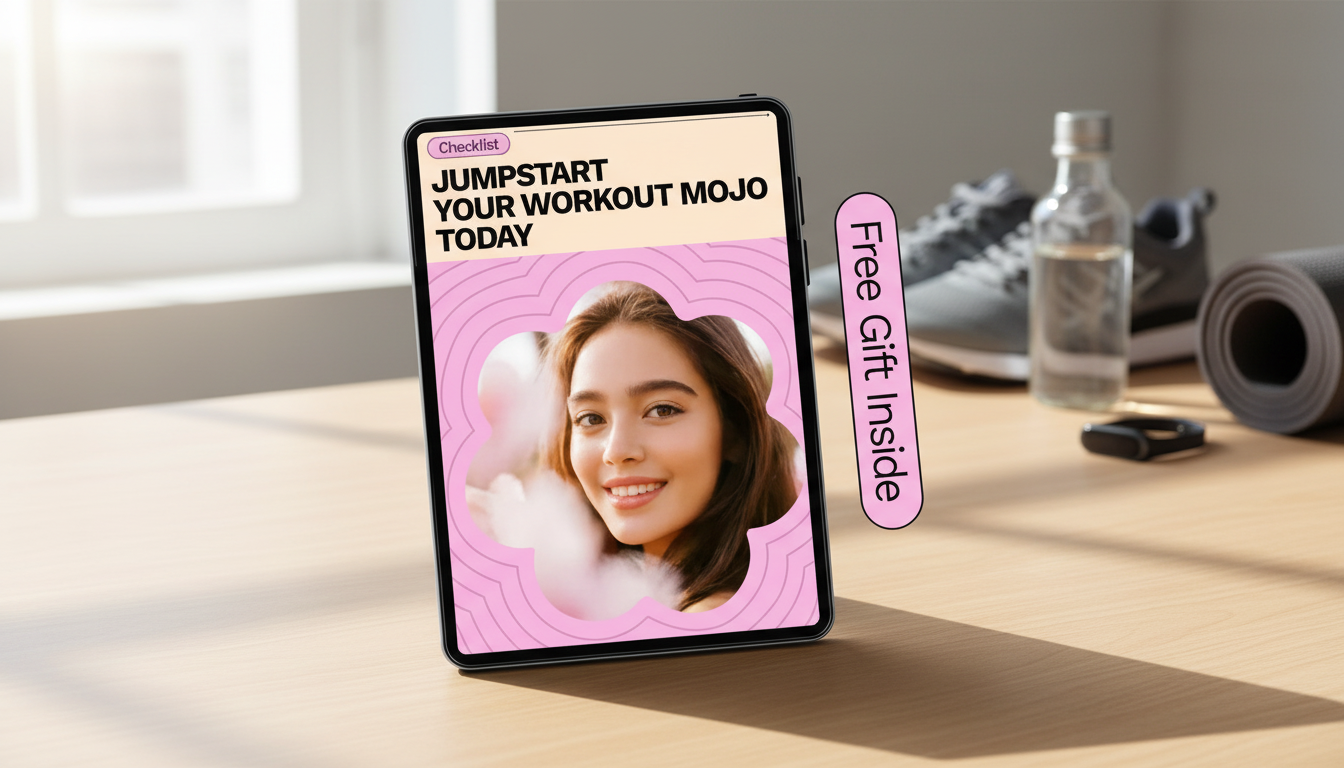
Jumpstart Your Workout Mojo Today: A Simple Checklist to Get Motivated to Exercise
Motivation isn’t something to “find”—it’s something to set up. When energy is low or routines are chaotic, a short, repeatable checklist can remove the friction that keeps workouts from happening. Use the steps below to choose a realistic plan, make starting easier, and build momentum that lasts past day one.
For extra structure on the days you don’t want to think, the printable-style option here is designed to be quick to use and easy to repeat: Jumpstart Your Workout Mojo Today – Checklist for How to Get Motivated to Exercise.
The 2-minute reset before planning anything
Before picking a workout, do a fast reset that makes “starting” feel smaller than “finishing.” The goal is to reduce friction, not to craft the perfect plan.
- Pick one reason that matters today. Choose a single “why” you can remember at 3 p.m.: better sleep, stress relief, confidence, strength, health markers, or simply a clearer head.
- Lower the bar on purpose. Commit to a minimum workout that’s almost impossible to fail—5 minutes, one song, or one short circuit.
- Decide where it fits. Attach it to an existing habit: after coffee, right after work, or before your shower. When it’s linked to something already automatic, it takes fewer mental reps.
- Remove one obstacle right now. Charge headphones, fill a water bottle, put shoes by the door, or clear a tiny floor space—anything that makes the first step smoother.
A practical motivation checklist (printable-style)
This is the “do it on autopilot” version. Keep it simple enough that you’ll actually use it—especially on low-motivation days.
- Choose a workout type that matches the day: strength, cardio, mobility, or a walk.
- Set a time cap: 10–20–30 minutes. Short sessions are easier to repeat and still count.
- Use an if-then plan: If motivation drops, then do the minimum workout.
- Prepare the environment: lay out clothes, clear a small floor space, queue a playlist or video.
- Start with an easy warm-up: 2–5 minutes to signal that the session is happening.
- Track only one thing: completed sessions per week. Skip complex metrics at the start.
- Reward the routine, not the result: mark it on a calendar, enjoy a quick shower ritual, or add a relaxing cooldown.
Motivation Roadblocks and Quick Fixes
| Roadblock | What it looks like | Quick fix to try today |
|---|---|---|
| Too tired | Feeling drained after work or poor sleep | Do 5 minutes of gentle movement or a short walk; decide after you start whether to continue |
| No time | Schedule feels packed; workout keeps getting pushed | Use a 10-minute timer and stop when it ends; consistency beats long sessions |
| No confidence | Worry about doing it wrong or being judged | Choose at-home basics: bodyweight squat, push-up variation, hinge, plank; keep reps comfortable |
| Boredom | Workouts feel repetitive | Swap one element: new playlist, different route, different exercise variation |
| All-or-nothing thinking | If it can’t be perfect, it doesn’t happen | Pick a minimum workout and count it as a win—momentum is the goal |
Build momentum with the “minimum workout” rule
If consistency has been a struggle, the minimum workout rule is the fastest way to stop “missed days” from turning into “missed months.” You’re training the habit loop first, and the intensity second.
- Define a minimum workout (3–8 minutes). Example: 10 squats, 10 wall push-ups, 20-second plank; repeat once.
- Give full credit for minimum workouts. A “small win” still builds identity: you’re someone who follows through.
- Add a bonus round when energy is higher. Keep the minimum requirement the same, but optionally stack one extra round, a longer walk, or a few more sets.
- Use a simple weekly target. Aim for 3 sessions/week for two weeks, then reassess based on how your schedule actually behaved.
If you want a ready-to-check format you can reuse without rewriting it each week, Jumpstart Your Workout Mojo Today – Checklist for How to Get Motivated to Exercise is built around the minimum-workout approach so “starting” stays simple.
Make exercise automatic with cues, convenience, and accountability
For a reality check on what “counts” as beneficial movement, the Physical Activity Guidelines for Americans (2nd edition) outline weekly targets, and the CDC’s benefits of physical activity page highlights why even modest consistency matters.
Turn motivation into a repeatable weekly plan
When stress is a major barrier, exercise can still be a useful tool—especially when the goal is “feel better after,” not “go hard.” The American Psychological Association’s overview of exercise and stress is a helpful reminder that the mental payoff often comes from consistency more than intensity.
A ready-to-use checklist you can keep on your phone
Printable support to stay consistent
If you also like having practical, no-fluff checklists for other routines, a similar format is available here: Rental Car Insurance Survival Checklist | Insurance for Rental Cars What You Need | Printable Travel Planning Checklist.
FAQ
How long does it take to build an exercise habit?
It varies by person and schedule, but progress is faster when the routine is small and repeatable. Focus on completing a minimum workout consistently for several weeks, anchored to a clear cue (like after coffee or after work), and let intensity grow later.
What if motivation disappears halfway through a workout?
Switch to the minimum workout, lower the intensity, or turn the session into a short walk or mobility work. Finishing something small preserves the habit loop and makes it easier to show up again tomorrow.
Is it better to work out in the morning or evening?
The best time is the one you can repeat with the least stress. Test two time slots for a week each, then choose the one with the higher completion rate and fewer disruptions.
















Leave a comment