Design a 3-in-1 Room: Office, Guests, Workouts
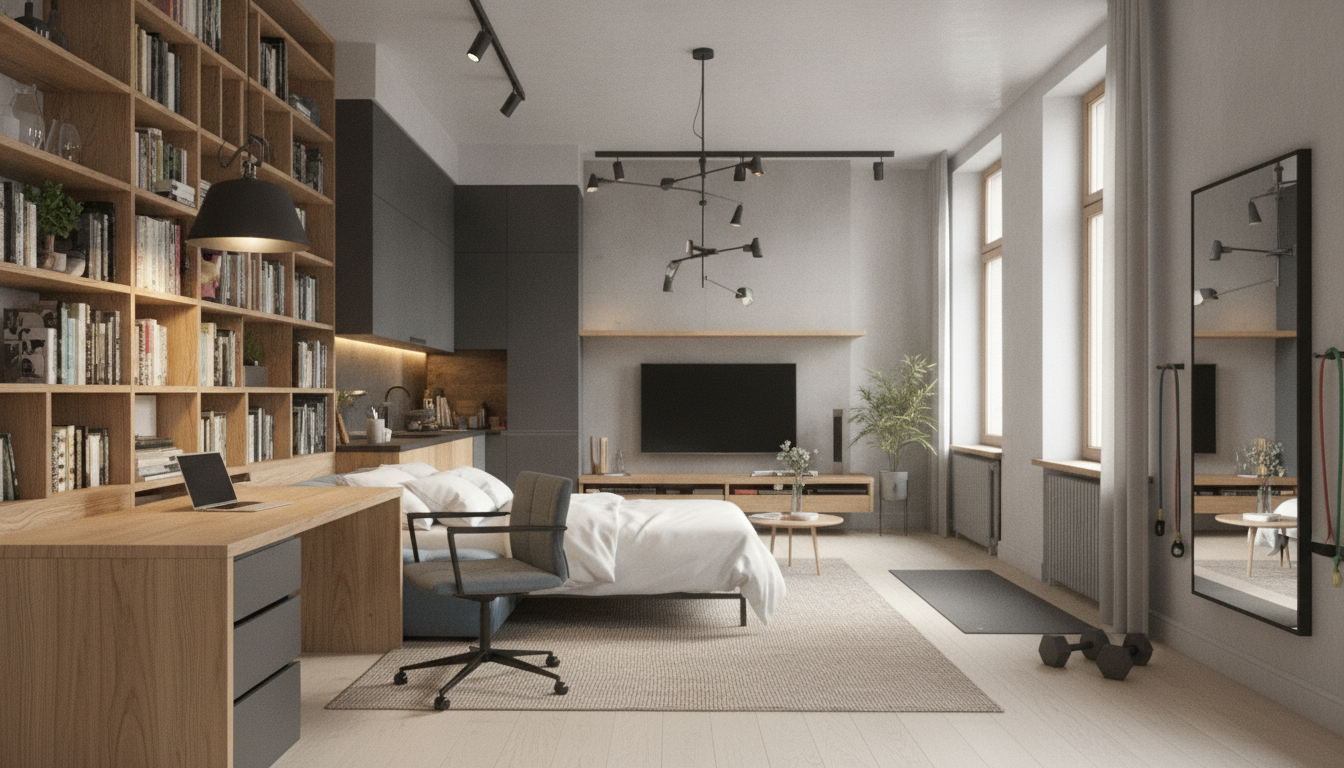
Design One Room to Do Three Jobs (Without the Constant Mess)
A single room can function as an office, guest space, workout zone, and everyday living area—without feeling cluttered or constantly “in transition.” The difference isn’t having more square footage; it’s designing around activities, movement paths, and quick-change setups. When the plan supports how life actually happens, the room stays calm, comfortable, and easy to reset.
Start with the activities, not the furniture
Before shopping or rearranging, get specific about what the room must do. Most “multifunctional” spaces fail because they begin with a piece of furniture and then force everything else to squeeze around it.
- List the top 3–5 uses the space must support (work, guest sleep, reading, workouts, dining, crafts).
- Rank uses by frequency and time-of-day conflicts (work and workouts often collide; guest sleep is occasional).
- Write the non-negotiables for each use (desk surface depth, monitor height, blackout needs, floor clearance, privacy).
- Identify what cannot share the same footprint (a rolling desk chair path vs. a treadmill or yoga mat zone).
- Choose a “default mode” that represents how the room looks 80% of the time, so it doesn’t feel permanently mid-setup.
Map the room: zones, circulation, and sightlines
Multifunctional layout is mostly about protecting movement and reducing visual noise. Start with a quick sketch of the room perimeter and mark constraints like doors, windows, vents/radiators, outlets, and any built-ins.
- Reserve a clear circulation lane from entry to key points; avoid placing fold-out pieces across primary paths.
- Use corners and window walls for anchored functions (desk near daylight; storage on the longest uninterrupted wall).
- Plan sightlines: hide clutter from the doorway using storage placement, screens, or higher-backed seating.
- Leave “swing space” for transforming furniture (Murphy bed clearance, sofa bed extension, folding table arc).
When planning clearances, it helps to keep accessibility in mind—especially around doors and tight passages. The ADA Standards for Accessible Design provide useful references for circulation and turning space concepts that can make a room feel easier for everyone to use.
Fast zone planning checklist
| Zone type | Minimum space to reserve | Best placement | Quick reset tip |
|---|---|---|---|
| Work/Study | Desk depth + chair pullback | Near outlets and natural light | Cable tray + desktop catch-all that empties into a drawer |
| Guest sleep | Full bed footprint or sofa bed extension | Away from main path; add privacy control | Dedicated bedding bin + two-step setup routine |
| Workout/Yoga | Mat length + arm sweep | Open center area or cleared wall | Wall hooks + foldable equipment stored vertically |
| Dining/Crafts | Table footprint + chair clearance | Near kitchen access or storage | Drop-leaf or folding table + labeled supply caddies |
| Relax/Read | Chair/sofa footprint + lamp reach | Quiet corner; avoid direct glare | Side table with one basket for current items only |
Choose a conversion strategy: fold, slide, stack, or swap
A 3-in-1 room works best when the transformation method matches daily habits. Pick one primary conversion strategy so setup doesn’t feel like a production.
- Fold: wall beds, drop-leaf tables, folding screens—ideal when daily changes must be fast.
- Slide: movable partitions, sliding panels, rolling carts—great when zones need separation without a full teardown.
- Stack: nesting tables, stackable chairs, modular cubes—smart for occasional hosting or hobby bursts.
- Swap: one item replaces another (desk becomes vanity; bench becomes step platform)—best when storage is strong.
Use a simple “two-minute rule”: if switching modes takes longer than two minutes, it won’t happen as often as planned.
Furniture that earns its footprint
In a multifunctional room, every big piece should justify the space it consumes. Focus on anchors that do more than one job and avoid “almost fits” pieces that create daily friction.
- Prioritize dual-purpose anchors: storage ottoman, sleeper sofa, lift-top coffee table, desk with concealed storage.
- Choose mobility where it helps: rolling carts, lightweight chairs, locking casters on filing cabinets.
- Use modular pieces to scale up/down: split sectionals, tuck-under benches, expandable tables.
- Keep ergonomics intact: correct desk height, supportive seating, and adequate task lighting.
- Protect clearances: tight layouts make quick resets harder and turn small inconveniences into daily annoyances.
Storage systems that make reset effortless
The secret to a room that changes functions daily is not “more storage,” but assigned storage. Each activity needs a clear home, so the room can return to default mode quickly.
Lighting, acoustics, and comfort for multiple modes
For daylight placement and comfort, the U.S. Department of Energy’s guidance on daylighting is a solid reference point. For lighting quality basics, the Illuminating Engineering Society (IES) is a helpful authority.
Three proven 3-in-1 room setups
1) Home office + guest room + workout zone
2) Living room + dining + hobbies
3) Bedroom + work + lounge
Common mistakes that make multifunctional rooms feel chaotic
A guided system for designing one space to do more
- How to Design One Space for Many Uses: 3-in-1 Multifunctional Space Design Bundle
- Summer Color Harmony Bundle | summer season colors 3-in-1 Digital Guides
FAQ
What is the best way to divide a room for multiple uses without building walls?
Start with layout-based zoning using rugs and furniture orientation, then reinforce separation with lightweight dividers like screens or curtains. Lighting presets and clear storage boundaries make each zone feel distinct without permanent construction.
How can a multifunctional room stay tidy when it changes functions daily?
Pick a default mode, give each activity dedicated containers, and do a nightly two-minute reset so surfaces return to “neutral.” Hide high-visual-noise items behind doors and set up a simple cable/charging plan to prevent cord clutter.
Which furniture pieces make the biggest difference in a 3-in-1 space?
One transformable anchor (like a sleeper sofa, Murphy bed, or drop-leaf table) changes the room’s function quickly. Add one mobile storage piece (rolling cart) and one vertical system (pegboard or tall cabinet) to keep the floor open and conversions easy.











Leave a comment