Beginner Balance Exercises at Home: 7-Day Start Plan
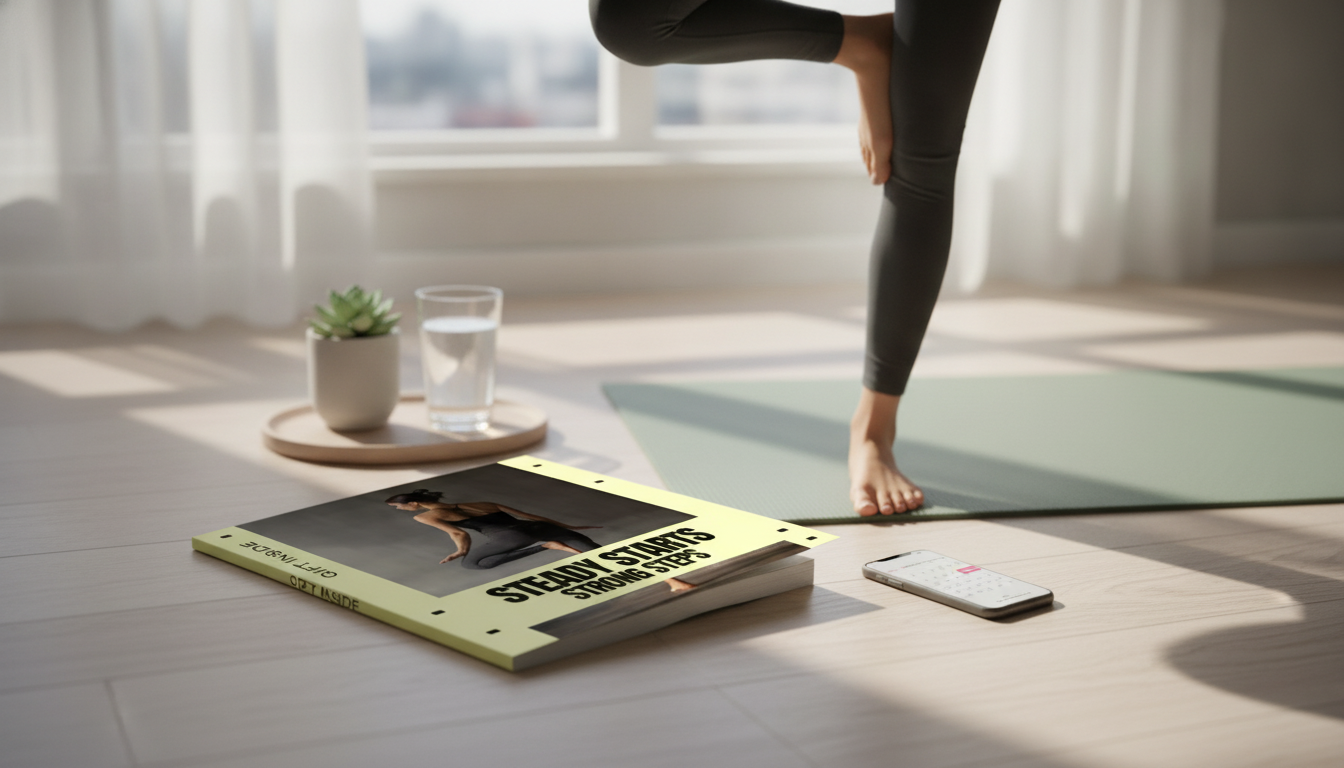
Steady Starts, Strong Steps: Beginner Balance Exercises for Safer, Confident Movement at Home
Better balance is built through small, repeatable practice—especially when exercises are simple, safe, and easy to fit into a daily routine. The goal isn’t perfection; it’s steadier steps, calmer turns, and more confidence moving around your home. Below you’ll find beginner-friendly balance training you can do at home, how to set up a safer practice space, and a gradual progression plan that helps you improve without feeling overwhelmed.
What “balance” really includes (and why beginners improve quickly)
Balance isn’t just “strong ankles.” It’s a teamwork system that blends leg and hip strength, coordination, vision, inner-ear (vestibular) input, and joint awareness (proprioception). When you start practicing, early improvements often come from better coordination and confidence—your brain learns the pattern and stops “overcorrecting.”
That’s why consistent, low-stress practice can pay off fast in daily life: steadier walking, safer turns, easier stair use, and less hesitation when reaching, carrying items, or stepping around obstacles.
A practical beginner plan usually trains four skills:
- Stable posture (stacked, calm alignment)
- Controlled weight shifts (moving your center of mass on purpose)
- Single-leg tolerance (even briefly, with support)
- Safe stepping and turning (real-life balance)
Safety first: setting up a risk-reducing practice space
The safest way to begin is with a sturdy support nearby—like a kitchen counter, heavy table, or stable chair. Avoid wheeled chairs and unstable furniture. Clear the floor so you’re not practicing around clutter, cords, or loose rugs. Good lighting matters more than most people realize.
Footwear is personal: supportive shoes are often safest at first. Later, barefoot practice can help foot strength and sensory feedback if your surfaces are clean, dry, and predictable.
Use a simple “two-hand rule” at the start: keep both hands near support (or lightly on it), then progress to one hand, then one fingertip, then no hands—while still staying close enough to catch yourself. If you feel dizziness, sharp pain, numbness, or unusual weakness, stop and reset. If symptoms persist, or if you’ve had a recent fall, surgery, or a neurological condition, check with a qualified clinician before continuing. For additional fall-prevention basics, see the CDC’s fall prevention guidance and the National Institute on Aging’s tips.
Quick safety checklist before each session
| Check | Why it matters | Fix in 30 seconds |
|---|---|---|
| Stable support nearby | Prevents loss of balance from becoming a fall | Stand near a counter; place a chair to the side |
| Clear floor space | Reduces trip hazards during stepping drills | Remove rugs/clutter; close drawers |
| Comfortable stance | Improves alignment and control | Feet hip-width; soften knees; tall posture |
| Breathing steady | Reduces tension and wobbling | Exhale slowly; relax shoulders |
| Pain-free range | Avoids compensations and strain | Make movements smaller; hold support |
Foundational moves: a simple beginner sequence (5–10 minutes)
This short sequence keeps effort manageable while training the essentials. Do it near a counter, moving slowly enough that you can breathe comfortably.
A 7-day starter routine that builds consistency
7-day balance starter plan (beginner-friendly, at home)
| Day | Focus | Routine (5–10 min) | Progression tip |
|---|---|---|---|
| Day 1 | Baseline control | Posture reset + weight shifts + supported single-leg holds | Use two hands as needed; aim for smoothness |
| Day 2 | Foot placement | Heel-to-toe stance + marching in place + sit-to-stand | Widen stance if wobbling |
| Day 3 | Endurance | Repeat Day 1 drills | Add 5 seconds to each hold if stable |
| Day 4 | Directional control | Weight shifts + gentle side steps along a counter | Short steps; slow return to center |
| Day 5 | Strength for balance | Sit-to-stand + calf raises holding support + marching | Move slowly on the lowering phase |
| Day 6 | Confidence day | Choose 3 favorite drills and repeat | Reduce hand pressure to “one-finger support” |
| Day 7 | Re-test | Repeat Day 2 and compare steadiness | Celebrate improvements; set next week’s target |
How to progress without overdoing it
A simple rule that works: progress when a drill feels steady for 2–3 sessions in a row. Balance also improves faster when paired with basic leg and hip strength. Add gentle squats to a chair, calf raises, and supported step-ups if those movements feel comfortable and controlled. General physical activity guidelines from organizations like the American College of Sports Medicine (ACSM) can help you think about weekly consistency without turning balance practice into exhausting workouts.
Confidence-building strategies that make practice stick
When extra structure helps: guided routines for beginners
If you want an organized set of beginner routines designed specifically for safe at-home practice, consider Steady Starts, Strong Steps – Ebook Guide to Balance Exercises for Beginners, Safe At-Home Training, Simple Daily Routines & Confidence-Building Movement.
And if steadier movement supports bigger life goals—like feeling confident on the go—planning tools can reduce stress, too. For travel organization, Rental Car Insurance Survival Checklist | Insurance for Rental Cars What You Need | Printable Travel Planning Checklist is a simple, printable way to keep key decisions clear and quick.
FAQ
How often should beginners practice balance exercises?
Short sessions most days work well for beginners—about 5–10 minutes, 4–6 days per week, with rest as needed. Consistency matters more than intensity, and gradual progression helps you stay safe.
What are the safest balance exercises to start with at home?
Start near a sturdy counter with posture reset, gentle weight shifts, supported marching, a wide-base heel-to-toe stance, and supported single-leg holds. Keep both hands close to support and make movements smaller if you feel unsteady.
When should balance training be paused or checked with a professional?
Pause and seek guidance if you have chest pain, severe dizziness, new numbness or weakness, sharp or worsening pain, or if you’ve recently fallen with injury. If you have a medical condition that affects balance (or recent surgery), supervised recommendations can keep training appropriate.
















Leave a comment