Home Decor Style Quiz + Checklist: Plan Every Room
Find Your Home Decor Style With a Simple Quiz and Room-by-Room Checklist
A clear decor style makes every decision easier—from paint and textiles to lighting and art. When a room feels “almost right” but never quite finished, the issue is usually a missing framework. A quiz-style checklist helps narrow down what feels most like you, then turns that clarity into practical choices that work across rooms, budgets, and phases of decorating. For more guidance, see Free Downloads – Interior Design ebooks on Home Decorating.
Why a decor style framework saves time (and prevents expensive do-overs)
A style framework is less about picking a label and more about building a repeatable filter for every purchase. When the filter is clear, fewer items end up “close, but not quite,” and rooms come together faster—even if you decorate over months or years.
- Reduces impulse buys: You stop grabbing trendy pieces that don’t fit your overall look.
- Improves mix-and-match confidence: A few rules (palette, materials, shapes, contrast level) make combining items feel predictable.
- Creates cohesion across rooms: Even gradual updates look intentional when they share the same visual language.
- Clarifies what to keep vs. replace: It becomes obvious what supports the direction—and what keeps derailing it.
How to use a style quiz checklist effectively
Style quizzes work best when they start with real life. A gorgeous look that ignores pets, rental restrictions, or low natural light won’t feel good day-to-day.
- Start with constraints: Rental rules, light levels, and how the room is actually used matter as much as inspiration photos.
- Answer quickly the first pass: Your “instant yes” reactions are the most useful signals.
- Look for your top 2 styles: A primary style plus a supporting style is more realistic than forcing one label.
- Translate results into rules: Pick three non-negotiables (must-haves) and three “avoid” items (common regrets).
Quick setup before taking the quiz
| Step | What to do | Why it matters |
|---|---|---|
| Collect 10 images you actually love | Use saved photos, screenshots, or magazine clippings | Reveals patterns in color, furniture shapes, and mood |
| Note what you dislike in your space | List 3 things that feel off (too dark, cluttered, cold, dated) | Prevents copying a style that worsens the problem |
| Pick one “anchor room” | Choose living room or bedroom | A single room sets the rules for the rest of the home |
| Set a budget lane | Low / medium / flexible | Determines where to invest (sofa, rug, lighting) vs. DIY |
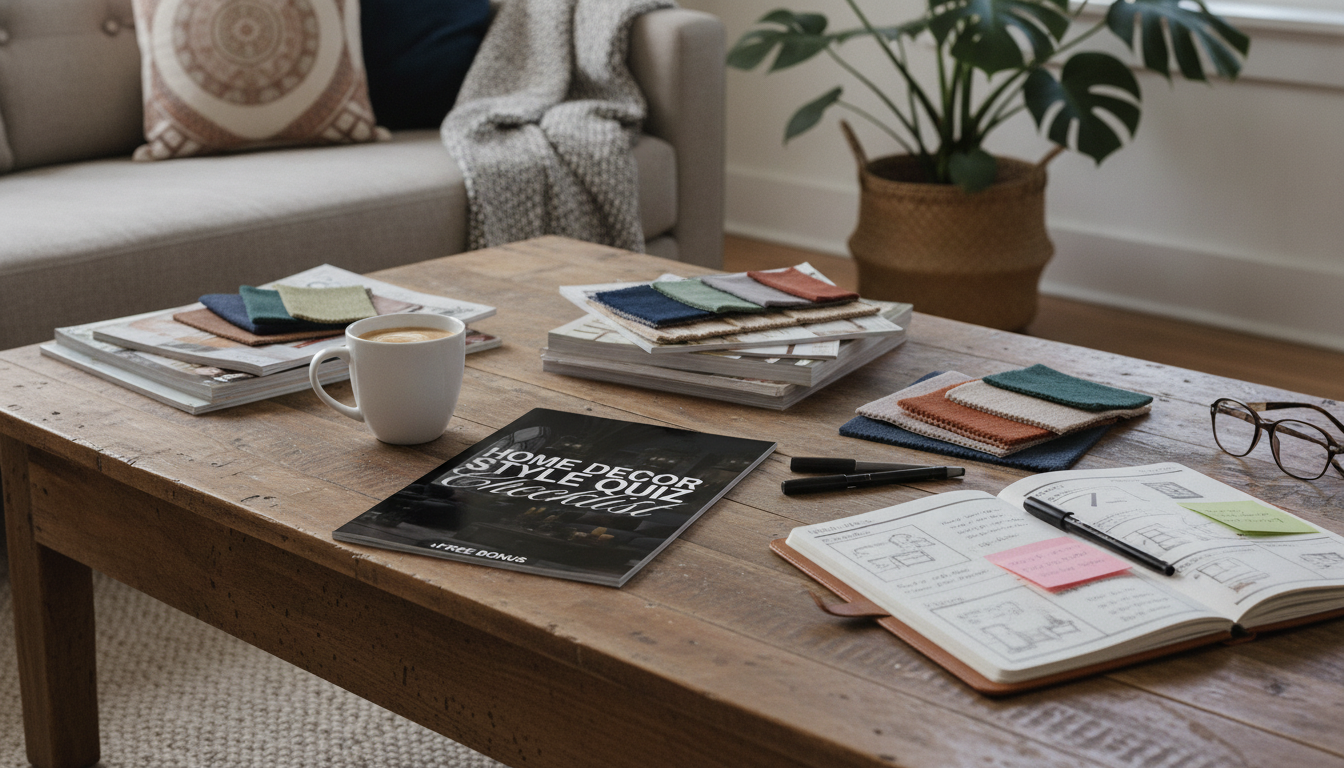
For a ready-to-use format you can revisit while shopping, the Home Decor Style Quiz Checklist (digital download) keeps the quiz results and room decisions in one place.
Common decor style families and the signals that reveal them
Most homes don’t live in a single “pure” style. Instead, you’ll see overlapping traits—like modern shapes paired with warmer, traditional textures. Use these signals as clues.
- Modern / contemporary: clean lines, simple silhouettes, higher contrast, and more negative space
- Scandinavian: light woods, soft neutrals, cozy textiles, functional pieces, minimal clutter with warmth
- Minimalist: strict editing, limited palette, calm materials, emphasis on open space
- Industrial: metal, exposed textures, utilitarian shapes, darker neutrals, vintage-inspired accents
- Traditional: classic shapes, symmetry, layered patterns, rich textures, timeless details
- Transitional: traditional structure with modern restraint; balanced and easy to update
- Boho / eclectic: mixed patterns, collected objects, layered textiles, global influences, creative color
- Farmhouse / rustic: natural materials, distressed finishes, warm neutrals, comfort-forward shapes
- Coastal: airy palette, relaxed textures, organic shapes, beachy calm without literal theming
- Mid-century modern: tapered legs, warm woods, iconic silhouettes, graphic shapes, curated color
Style clues by what you’re drawn to
| If you prefer… | Likely style direction | Try adding… |
|---|---|---|
| Bright whites, light oak, cozy knits | Scandinavian | A wool rug and warm ambient lighting |
| Black accents, simple shapes, open space | Modern / minimalist | One oversized art piece for impact |
| Weathered wood, comfy slipcovers, vintage finds | Farmhouse / rustic | Woven baskets and matte ceramics |
| Brass, curves, layered patterns, classic furniture | Traditional / transitional | A tailored neutral sofa with patterned pillows |
| Mixed textiles, plants, colorful art, collected decor | Boho / eclectic | One unifying palette to keep it cohesive |
| Walnut tones, low profiles, retro shapes | Mid-century modern | A statement sconce or cone-shade lamp |
Turn quiz results into a cohesive room plan
If choosing colors feels like the hardest part, a structured color resource can speed up decisions and reduce repainting. The Summer Color Harmony Bundle (digital guides) is a useful option when you want a more coordinated approach to palettes.
Room-by-room checklist: what to decide in the right order
Decision order that prevents mismatched purchases
| Space | Buy/decide first | Then add | Finish with |
|---|---|---|---|
| Living room | Sofa + layout | Rug + coffee table | Pillows, throws, styling objects |
| Bedroom | Bedding palette | Lamps + nightstands | Art, bench, decorative storage |
| Dining | Table size/shape | Chairs + lighting | Table linens, centerpiece, wall accents |
| Entry | Drop zone | Mirror/lighting | Runner, baskets, seasonal swaps |
| Office | Chair + desk setup | Task lighting + storage | Art, one plant, desktop organization |
For added guidance while planning, browse inspiration and best practices from established design references like Houzz decorating guides, Architectural Digest design ideas, and color education resources from Sherwin-Williams.
Avoid the most common “style confusion” traps
Printable guide option for quick progress
FAQ
Can more than one decor style be “right” for the same home?
Yes—most homes look best with a primary style and a supporting style. Keep the secondary style limited to accents or a specific material/shape family so the overall space stays cohesive.
How often should a decor style quiz be retaken?
Retake it after a major change like moving, renovating, or a shift in household needs. Otherwise, keep your results steady and refresh mostly through accessories or seasonal textiles.
What’s the fastest way to make a room look more pulled together after identifying a style?
Align the “big three”: correct rug size, appropriately scaled lighting, and consistent metal/wood finishes. Then edit visible clutter and repeat your accent color two or three times.










Leave a comment