Raise a Friendly Kid: Easy Social Skills & Confidence Tips
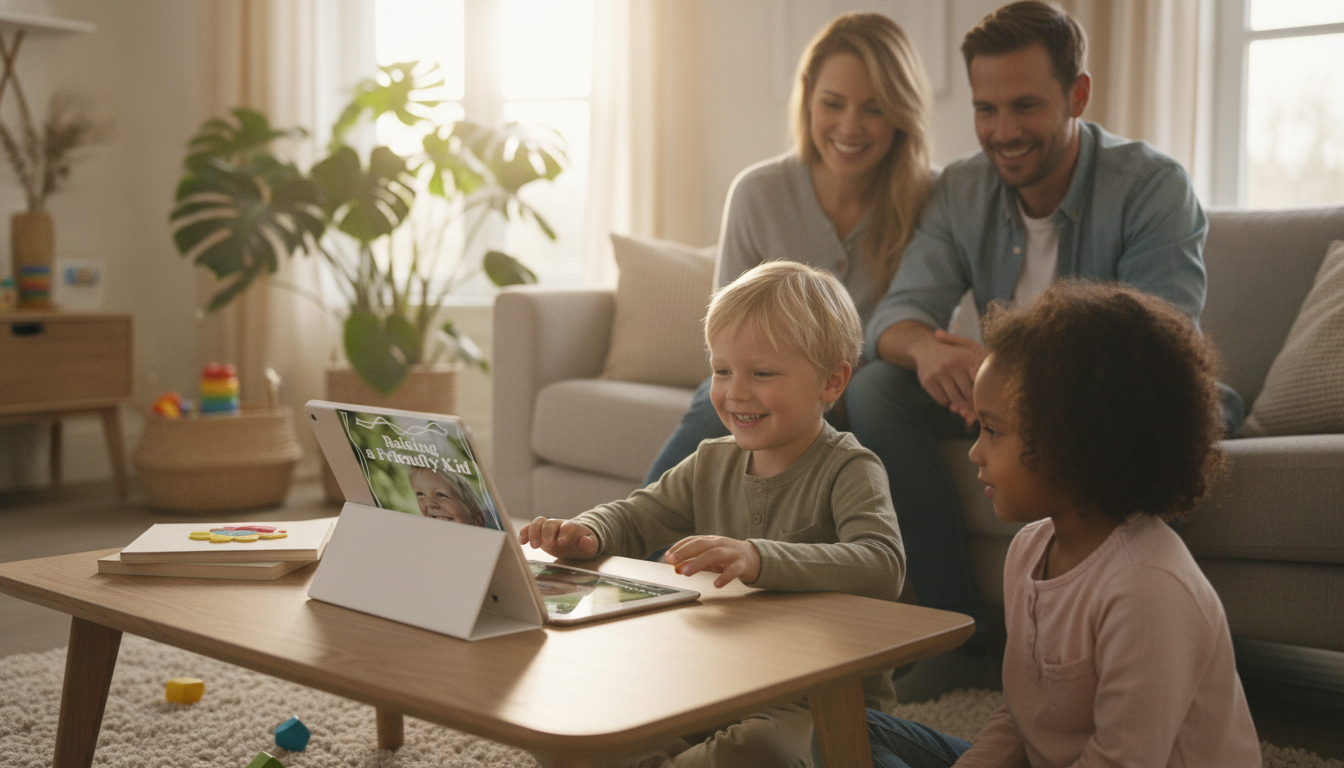
Raising a Friendly Kid Starts with You: Practical Ways to Build Social Skills and Friendship Confidence
Friendliness isn’t a personality trait kids either have or don’t have—it’s a set of learnable skills shaped by daily experiences. Small parenting choices (how conflict is handled, how feelings are named, how play is guided) can steadily grow a child’s confidence in making and keeping friends. With realistic expectations for each age and a few repeatable “practice moments,” kids can learn how to greet others, join in, handle disappointment, and repair after mistakes.
What “friendly” looks like at different ages
Social skills grow in layers. When expectations match a child’s developmental stage, “friendly” becomes something they can practice—without pressure to perform.
- Toddlers: Parallel play, very short turn-taking, simple greetings, and learning “mine” vs. “ours” without shame.
- Preschoolers: Cooperative play, imaginative roles, practicing “Can I play?” and coping with “not right now.”
- Early elementary: Rules-based games, fairness, handling mild teasing, and repairing after mistakes.
- Upper elementary: Deeper friendships, loyalty, group dynamics, inclusion, and (when relevant) navigating messaging or social media.
Key idea: Friendly behavior grows through practice, not pressure. A child who’s still learning isn’t “not friendly”—they’re still building the skill.
The parenting habits that shape social skills the most
Kids learn social behavior the way they learn language: through exposure, repetition, and seeing it used in real life.
- Model the basics: greeting others, using names, showing interest, and ending conversations politely. Kids copy what they see daily.
- Teach emotional vocabulary: naming feelings (“disappointed,” “nervous,” “left out”) reduces impulsive reactions and supports empathy. The CDC’s parenting resources include practical guidance for building these everyday skills: CDC: Positive Parenting Tips.
- Use calm, consistent boundaries: predictable limits help kids feel safe initiating play and trying new social situations.
- Narrate problem-solving out loud: “I’m going to ask a question,” “I’m going to take a breath,” “I’ll try again later.”
- Reinforce effort, not popularity: praise attempts (“You asked to join—brave!”) more than outcomes (“Everyone liked you!”).
Friendly skills kids can practice at home (and why they work)
Short practice beats long lectures. Aim for 2–5 minutes at a time, and keep it playful. These “micro-reps” build confidence before kids have to use the skill in a bigger moment.
- Greeting practice: role-play saying hi, comfortable eye contact, and asking one simple question.
- Joining play: practice three scripts—“Can I play?”, “What are you playing?”, “How can I help?”
- Sharing and turn-taking: use timers or “two turns each” rules during games to make fairness concrete.
- Listening skills: play “repeat back,” where the child summarizes what the other person said before responding.
- Repairing after conflict: teach a short, specific apology—“I’m sorry I grabbed it. Can I have a turn after you?”
| Skill | Simple words to use | At-home practice (2–5 minutes) |
|---|---|---|
| Joining a group | “Can I play too?” / “What are you building?” | Pretend play where the child practices entering a game already in progress |
| Handling “no” | “Okay. I’ll try later.” / “Who else can I ask?” | Role-play a polite refusal and a calm next step |
| Taking turns | “My turn next, please.” / “Thanks for waiting.” | Board game with a visible turn marker (coin, card, baton) |
| Showing interest | “Tell me more.” / “How did you do that?” | Practice asking two follow-up questions during dinner |
| Repairing | “I didn’t like that. Let’s try again.” | Re-do a messy moment: pause, reset, and try the kinder version |
Building friendship confidence without forcing extroversion
Not every friendly kid is loud. A slow-to-warm child can be deeply kind and loyal—often with fewer, steadier friendships.
For more on healthy social-emotional development across childhood, the American Academy of Pediatrics offers parent-friendly guidance: American Academy of Pediatrics: Social-Emotional Development.
Common social challenges and supportive responses
Many schools use social-emotional learning language that can also be used at home; CASEL’s overview of core competencies can help align your scripts with what kids may hear in classrooms: CASEL: Core Competencies.
A simple weekly routine for social-skill growth
Using a structured guide to stay consistent day to day
If a structured, repeatable plan would help at home, consider the digital resource here: Raising a Friendly Kid Starts with You – Parenting Guide eBook (digital download).
Other helpful digital picks that can support family routines and planning include: Calling Your Pet: Cute vs. Classic – A Smart Guide to Choosing Cute vs Serious Pet Names with Confidence and Rental Car Insurance Survival Checklist | Insurance for Rental Cars What You Need | Printable Travel Planning Checklist.
FAQ
What if a child is shy—can they still be friendly?
Yes. Friendliness is a set of behaviors—like greeting, taking turns, and repairing—not a measure of loudness. Gentle exposure, a simple script to use, one-on-one friendships, and celebrating small attempts build confidence over time.
How can social skills be taught without constant correcting?
Use brief role-play, model the skill yourself, and pre-teach before events (“When we get there, you can say hi and ask one question”). Keep corrections calm and limited to one skill at a time, and give specific praise for effort.
What should a parent do when a child keeps getting left out?
Start by validating the feeling, then make a plan: practice joining phrases, identify one approachable peer, and create chances to connect (like inviting one child to play). If the pattern is frequent at school, partnering with the teacher can help clarify what’s happening and support healthier group dynamics.
















Leave a comment