Wear Confidence: Simple Steps to Feel Great in Your Clothes
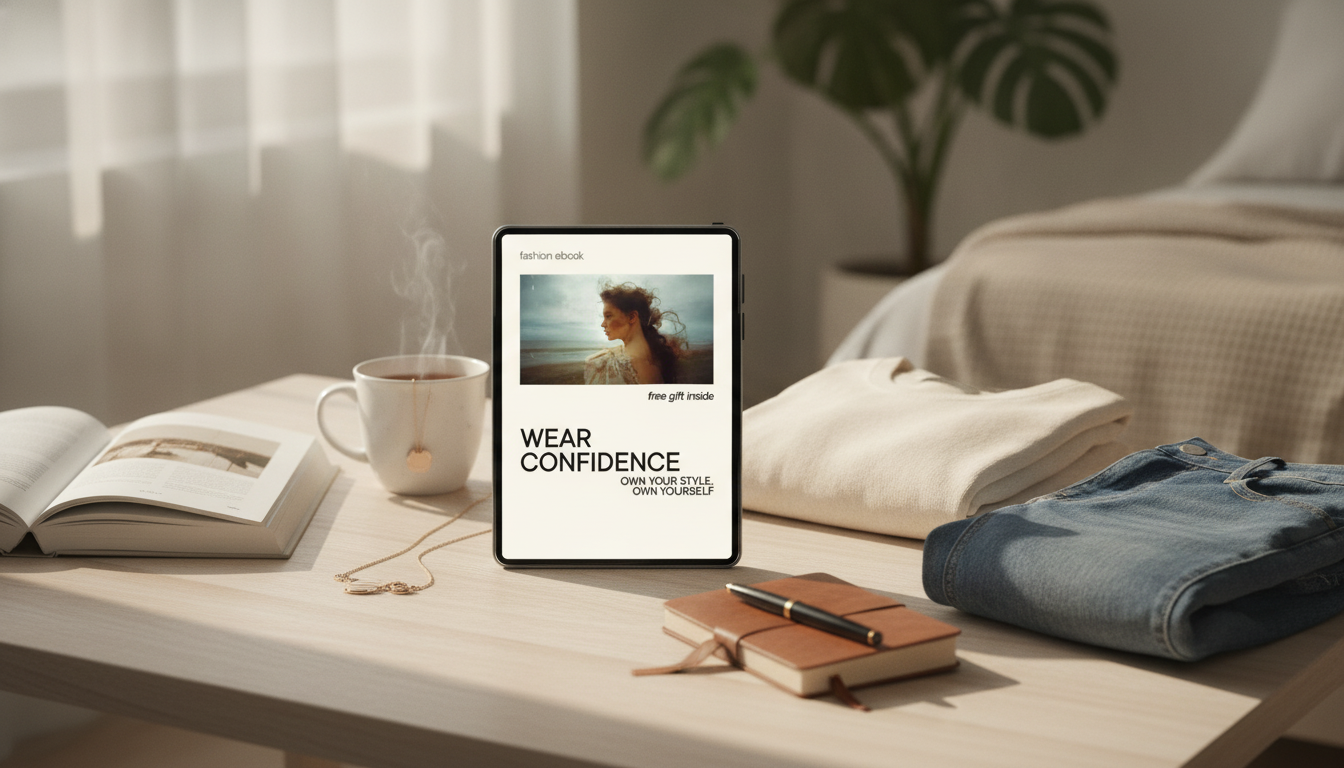
Wear Confidence: Own Your Style, Own Yourself — How to Feel Confident in Your Clothes
Confidence in clothing rarely comes from chasing trends; it comes from alignment—between comfort, fit, identity, and the message an outfit sends. When those pieces click, you stop “wearing an outfit” and start moving through your day with less self-monitoring and more presence. Clothing can even shape how you think and perform in the moment (a concept supported by research on enclothed cognition).
Below are practical, repeatable ways to get dressed with more ease—without needing a complete wardrobe overhaul.
What “wearing confidence” actually looks like
Confidence isn’t reserved for a lucky few; it’s often the outcome of feeling safe, authentic, and prepared. A confident outfit is usually recognizable by three quick signals:
- Comfort: you’re not tugging straps, pulling hems, or thinking about pinching waistbands.
- Cohesion: colors and shapes look intentional—even if the outfit is simple.
- Self-recognition: you look in the mirror and think, “Yes, that’s me.”
One useful mental switch: replace “Does this look good?” with “Does this support what I’m doing today?” (work meeting, errands, date night, travel day, presentation). Confidence drops when clothing fights the job you’re asking it to do.
Watch for common traps: copying a look without adapting it to your body and routine, buying for a fantasy lifestyle, or dressing to disappear when you actually want to be seen.
Confidence check: quick outfit diagnostics
| If you feel… | Likely cause | Fast fix (5 minutes) |
|---|---|---|
| Self-conscious | Too tight/too loose or see-through in the wrong places | Swap base layer, size up/down, add a third piece (cardigan, blazer, overshirt) |
| Under-dressed | Fabric or structure too casual for the setting | Add one structured item (belt, loafers, blazer, tailored jacket) |
| Over-dressed | High polish where comfort is expected | Relax one element (sneakers, knit, undone hair, casual bag) |
| Bored | Same silhouette every day | Change one variable: neckline, hem length, or shoe profile |
| Not like yourself | Trend mismatch or color tone feels “off” | Return to a known “signature” piece and keep the rest simple |
Start with identity: define your style in three words
If your closet feels random, start with language. Pick three words that describe how you want clothes to feel on you—not how you want to impress others. Examples: “clean, bold, effortless” or “soft, artistic, grounded.”
- Use the words as a filter: when shopping or getting dressed, each outfit should clearly express at least two words.
- Create a signature: a repeatable element that feels like home (gold hoops, monochrome looks, a blazer, a specific sneaker silhouette, a scarf).
- Set a comfort threshold: decide your limits for exposure, tightness, and heel height so you’re not negotiating with your outfit all day.
Self-esteem is closely tied to how you evaluate yourself overall (see the APA Dictionary of Psychology definition). Your “three words” help you evaluate outfits by your standards instead of shifting external ones.
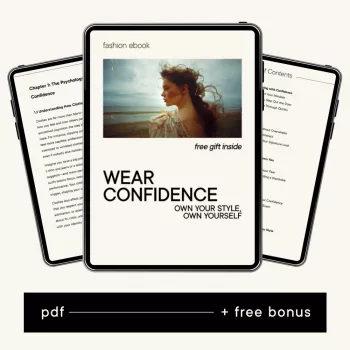
If you want a structured way to turn this into a clear, personal system, the digital guide Wear Confidence: Own Your Style, Own Yourself – How to Feel Confident in Your Clothes walks through practical prompts and outfit-building steps you can reuse year-round.
Fit is the fastest confidence upgrade (without changing your body)
Fit is often the difference between “fine” and “I feel like myself.” Start with the high-impact areas: shoulders, waist/hips, and inseam. Small tweaks here can make an affordable item look custom.
- Tailor strategically: hem pants, shorten sleeves, or take in a waist—especially on items you wear weekly.
- Check movement fit: sit, reach, walk, and raise your arms. If your outfit restricts motion, your attention will stay on your clothes instead of your day.
- Undergarments matter: supportive bras, seamless base layers, and smoothing shorts reduce fussing and pulling.
- Personal rule: if it needs constant adjusting, it’s not a confidence piece.
Color and cohesion: make outfits look intentional
You don’t need a huge wardrobe to look put-together—you need a plan. A simple palette does most of the heavy lifting:
For a deeper, color-first approach to getting dressed with less guesswork, Summer Color Harmony Bundle | summer season colors 3-in-1 Digital Guides can help you build outfits around shades that naturally feel harmonious.
Build a “confidence closet”: outfits you can trust
Body image moments: what to do on low-confidence days
Some days, confidence isn’t a pep talk—it’s a plan. If body image is feeling loud, aim for neutral instead of forcing positivity. (For supportive, health-based guidance on body image, see the Better Health Channel overview.)
A guided reset: quick exercises to wear confidence
If you want these prompts laid out as a step-by-step workbook, Wear Confidence: Own Your Style, Own Yourself – How to Feel Confident in Your Clothes is designed for quick wins and long-term clarity.
If outfits still feel off: common blockers and simple solutions
FAQ
How can confidence improve quickly without buying new clothes?
Do a five-minute upgrade: steam or lint-roll, choose your most reliable shoes, and add a third piece like a blazer or open cardigan. Stick to a simple palette and photograph 3 “hero” outfits so you can repeat what already works.
What should be in a confidence outfit formula?
Include a comfort threshold, one structured element, one personal signature, balanced proportions, and a simple palette rule. For example: straight-leg jeans + fitted knit + blazer + sneakers/loafers, or wide-leg trousers + tucked tee + belt + structured jacket.
How do you find your personal style if you feel stuck?
Start with the three-word method, then track what you actually reach for and how you feel wearing it. A small experiment—wearing variations of one silhouette for a week—helps you learn your sensory preferences and what fits your real daily life.










Leave a comment