Freelance Testimonials: Best Timing, Scripts & AI Tips
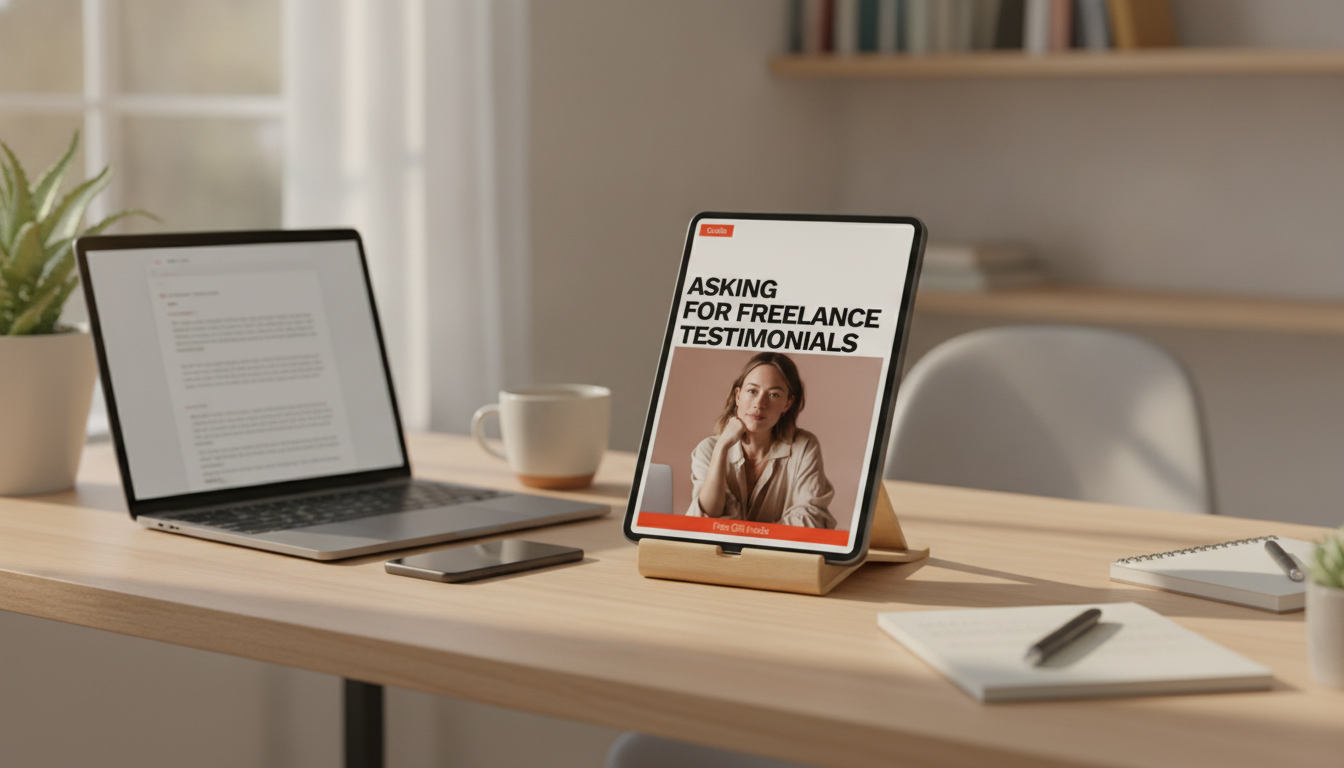
Asking for Freelance Testimonials: Timing, Scripts, and AI-Assisted Review Boosting
Testimonials can shorten the trust-building cycle for freelance services, but many clients need a clear, low-effort way to share specific results. The goal is to collect feedback that sounds like a real person, reflects real outcomes, and is clearly approved for the exact places you plan to use it—your website, proposals, and profiles.
Below are practical moments to ask, copy-and-send scripts, and a simple way to use AI to polish what a client already said (without adding claims). For advertising and review compliance basics, it’s also worth skimming the Federal Trade Commission guidance on endorsements and testimonials and the Google Maps user-contributed content policy.
What makes a testimonial persuasive (and safe to use)
The strongest testimonials sound “effortless” because they’re specific. They mention the problem, what changed, and why working together felt easy—without drifting into exaggerated promises.
- Specific outcome beats generic praise: Include scope, before/after, measurable impact, and timeframe when available.
- Credibility signals: Name, role, company, and context help—only with explicit permission.
- Relevance: Match the quote to the service line and the buyer concern (speed, quality, ROI, communication).
- Clarity: One strong sentence is better than a paragraph of vague compliments; keep edits minimal and approved.
- Permission and privacy: Confirm where it will appear and whether anonymity is required.
Testimonial quality checklist
| Element | Why it matters | Quick example |
|---|---|---|
| Problem | Shows the starting point | “Our onboarding emails were underperforming.” |
| Solution | Connects result to the work delivered | “Rewrote the sequence and added segmentation.” |
| Result | Makes the value concrete | “Conversions increased by 18% in 30 days.” |
| Differentiator | Explains why hiring you felt better than alternatives | “Fast turnaround and proactive suggestions.” |
| Attribution | Adds authenticity and social proof | “— Taylor Nguyen, Head of Growth, Acme Co.” |
| Usage permission | Avoids disputes and compliance issues | “OK to publish on website + proposals.” |
The best moments to ask (without feeling awkward)
Timing matters because enthusiasm fades and context gets lost. The best asks happen when the “win” is fresh and the request is genuinely small.
- Right after a visible win: Launch day, stakeholder approval, milestone sign-off, or a “this is exactly what we needed” message.
- At project wrap-up: Make testimonials part of offboarding: wrap + next steps + feedback.
- After measurable impact: Follow up 2–6 weeks later when results appear (traffic, conversions, time saved, fewer support tickets).
- After a referral: If a client recommends you informally, ask to capture that sentiment as a publishable quote.
- Avoid high-stress windows: During crises, scope changes, or billing disputes; resolve first, ask later.
A simple ask framework that increases replies
Most clients don’t ignore you because they’re unhappy—they ignore you because writing feels like work. Reduce the effort and the decision-making.
- Make it easy: Offer 2–4 bullet prompts so they can reply in under two minutes.
- Make it specific: Reference the deliverable and the win you observed (approval, faster turnaround, improved metric).
- Give options: Text reply, short form, LinkedIn recommendation, or a 2-minute voice note.
- Ask for permission separately: Confirm name/title/company and where the quote can be used.
- Follow up once: After 4–7 days, send a gentle reminder and include a draft they can edit.
Copy-and-send templates (email, LinkedIn, and form prompts)
Use these as-is and swap the brackets. Keeping the ask short and structured tends to increase response rates.
Short email (post-delivery)
“Thanks again for approving [deliverable]. If you’re happy with the outcome, could you share 2–3 sentences about (1) what you needed, (2) what changed after the work, and (3) what it was like working together? If it’s easier, reply with bullets. Also let me know if you prefer your name/company shown or kept anonymous.”
Results-timed follow-up
“Quick check-in—have you noticed any early impact from [work]? If yes, would you be open to a brief testimonial I can use on my site/proposals? One or two sentences is perfect.”
LinkedIn recommendation ask
“Would you be willing to add a LinkedIn recommendation highlighting the project and outcome? I can send a draft you can edit so it takes less than a minute.”
Micro-form prompts (Typeform/Google Form)
Low-friction option (voice note)
AI tips: turning raw feedback into portfolio-ready quotes (with approval)
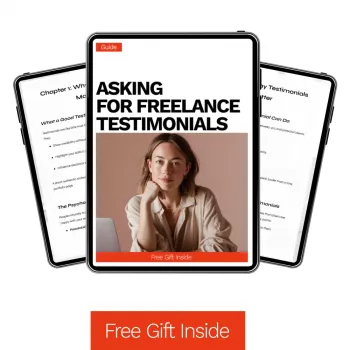
If you want a repeatable, plug-and-play workflow (prompts, scripts, and permission language), use the Asking for Freelance Testimonials Guide – templates and AI tips to standardize your process after every project.
How to organize, rotate, and reuse testimonials across your funnel
A ready-to-use toolkit for faster client reviews
For a compact set of scripts, prompts, and AI-assisted wording workflows, the Asking for Freelance Testimonials Guide – How to Ask for a Freelance Testimonial, Templates & AI Tips for Boosting Client Reviews is built to run as a checklist you reuse after every delivery.
Also available in the shop (popular digital guides): Rental Car Insurance Survival Checklist and Calling Your Pet: Cute vs. Classic.
FAQ
How many testimonials should a freelancer aim for?
A solid baseline is 5–10 strong, specific testimonials that cover your main services and a few industries. Rotate them so your website and proposals always show the most relevant proof for the buyer in front of you.
Is it okay to edit a client’s testimonial?
Yes—light editing for clarity, length, and grammar is fine as long as the meaning doesn’t change. Always send the edited version back for explicit approval and confirm exactly where it will be published and how it will be attributed.
What if a client is happy but never responds to the ask?
Send one polite follow-up after 4–7 days and include a draft they can quickly approve or tweak. Offer an alternate format (short form, LinkedIn recommendation, or voice note), then move on without pressure.














Leave a comment