Conquer Flight Anxiety: Fast Calm Tools for Turbulence
Flying Without Fear: Calming Techniques That Help Nervous Flyers Feel Steady
Flight anxiety often shows up as racing thoughts, a tight chest, nausea, sweaty palms, or a powerful urge to avoid boarding—even when the trip matters. A calmer flight usually comes from having a plan for both the body (breathing, muscle tension, sensory grounding) and the mind (realistic thinking, routine, and helpful facts). The techniques below are designed for real moments: the gate announcement, the pushback, the takeoff roll, and those unexpected bumps in the air.
Why fear spikes during flying (and why it feels so intense)
Flying stacks several common anxiety triggers at once: limited control, unfamiliar sensations, confined space, and “what if” thinking. When the nervous system is already on alert, normal flight sensations can be misread as danger—engine pitch changes, acceleration, vibration, or pressure shifts in the ears.
Avoidance can also keep the fear strong over time. If every trip becomes a “never again” moment, the brain learns that escaping is the only safe option. Small, planned exposures paired with coping skills (even watching takeoff videos while practicing breathing) can reduce sensitivity. A realistic target helps: aim for manageable discomfort, not a perfectly calm experience.
Prepare in the days before: a simple practice routine
The best in-flight tools are the ones your body recognizes quickly. Pick two or three techniques and practice daily for 5–10 minutes so they feel familiar under stress. Think of it as rehearsal, not homework.
- Stabilize the basics: consistent sleep, hydration, and steady meals reduce baseline anxiety and lessen dizziness or jitters that can mimic panic.
- Limit stimulants: if caffeine ramps up your heart rate or restlessness, reduce it the day before and day of travel.
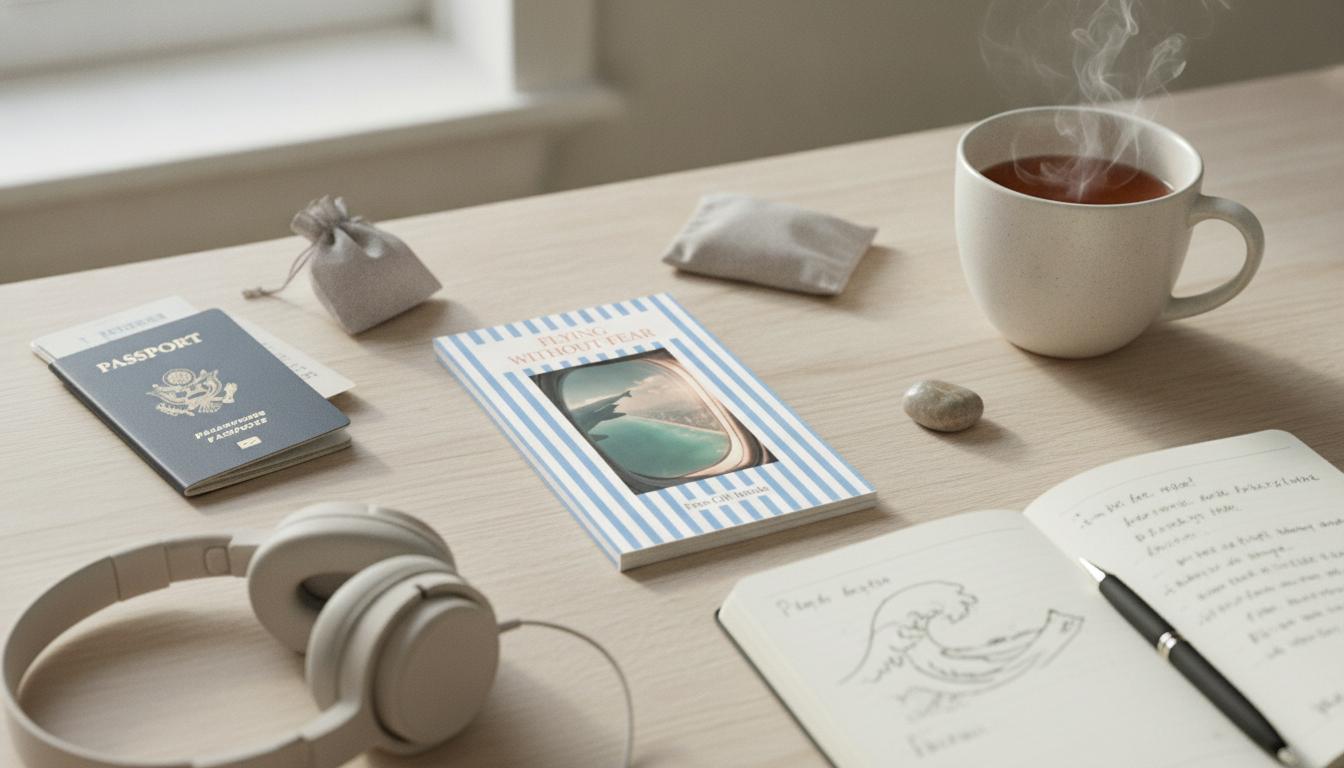
- Create a calm kit: noise-canceling headphones, a soothing playlist, gum, a water bottle (after security), an eye mask, and a grounding object (smooth stone, small fidget, or a piece of fabric).
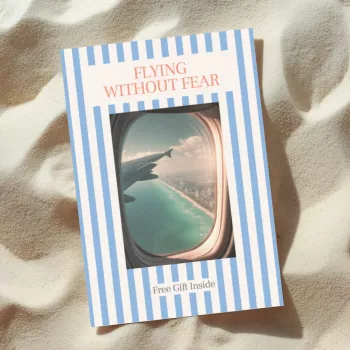
If you like having a structured guide ready offline, keep a saved copy of a step-by-step routine on your phone or e-reader. The Flying Without Fear: Calming Techniques for Nervous Flyers eBook Guide is a portable option you can open quickly at the gate or mid-flight.
Calming techniques that work fast: body-first tools
When anxiety surges, start with the body. These tools reduce the “alarm” signals that keep the mind spinning.
- Paced breathing: inhale for 4 seconds, exhale for 6 seconds for 2–5 minutes. Longer exhales cue the body to downshift. (For more breathing ideas, see the NHS breathing exercises guide.)
- Progressive muscle relaxation: tense one muscle group for 5 seconds, release for 10 seconds; move from feet to shoulders. Relaxing on purpose reduces bracing.
- Grounding (5–4–3–2–1): name 5 things you see, 4 you feel, 3 you hear, 2 you smell, 1 you taste. It interrupts spirals by re-engaging the senses.
- Temperature shift: sip cold water, use a cool wipe, or hold something cool to signal a reset during a surge.
- Posture check: feet flat, shoulders down, jaw unclenched. An open chest posture can reduce the “brace for impact” pattern.
Quick calm plan by flight phase
| When anxiety spikes | What to do (2–3 minutes) | What to say to yourself |
|---|---|---|
| Boarding and door closing | Exhale 6 seconds x 10 breaths; press feet into floor; relax shoulders | “My body is sounding an alarm; I can ride it out.” |
| Takeoff roll | Count breaths; unclench hands; focus eyes on a fixed point | “This is loud and powerful, not dangerous.” |
| Turbulence | Grounding 5–4–3–2–1; loosen grip; slow exhale | “Bumps are normal; the plane is built for this.” |
| Cruise with racing thoughts | Write 3 worries, then 1 realistic response each; return to a distraction | “Thoughts are not predictions.” |
| Descent and landing | Muscle release scan; sip water; steady breathing | “The flight is finishing; I can stay present.” |
Mind tools: how to respond to catastrophic thoughts
The goal isn’t to argue with yourself for an hour; it’s to respond once, clearly, and then return to a chosen anchor.
For broader anxiety education and tools, the American Psychological Association (APA) anxiety resources can be a helpful starting point.
At the airport and on board: practical choices that reduce stress
If your trip includes driving after landing, a ready-to-use checklist can reduce decision fatigue on the ground. Consider the Rental Car Insurance Survival Checklist to sort coverage questions before you reach the rental counter.
A structured eBook plan for nervous flyers
Product option (digital, in stock): Flying Without Fear: Calming Techniques for Nervous Flyers eBook Guide.
If fear feels overwhelming: when to get extra support
For general information on turbulence from an official aviation authority, visit the Federal Aviation Administration (FAA).
FAQ
What should be done if a panic attack starts mid-flight?
Use a body-first reset: slow the exhale (aim for longer exhales than inhales), do a quick grounding exercise, and release muscle tension in your shoulders and hands. Reduce stimulation with headphones or an eye mask, remind yourself the peak passes, and ask a flight attendant for support if needed.
Is turbulence dangerous to the plane?
Turbulence is common, and modern aircraft are designed and tested to handle it. Injuries are more often caused by not being buckled, so keeping your seatbelt fastened when seated is a practical safety step.
Which seat is best for anxious flyers?
An aisle seat can feel less confining if claustrophobia is the main issue, while seats over the wing often feel steadier during bumps. The best choice is the one that addresses your biggest trigger—space, motion, or access to the aisle.















Leave a comment